
Leveraging global practice for efficient EU impact reporting by non-EU companies
Published date: 19 October 2026

Recognition of established sustainability disclosure in draft ESRS-40a is vital to reduce reporting burden and support a level playing field
New impact reporting rules for non-EU companies must allow organizations to build on their existing disclosure practices – whether voluntarily or mandatory – to reduce duplication and ease compliance. This is a central recommendation in GRI’s response to the EFRAG consultation on a draft ESRS-40a reporting standard.
ESRS-40a is the proposed version of the European Sustainability Reporting Standards (ESRS) that will apply to certain large non-EU companies with significant business activities in the EU. Given that a majority of the companies likely in scope already report with GRI – and that the GRI Standards fully or partially cover 97% of ESRS-40a disclosure requirements – recognizing that GRI reporting can be referred to by companies is a logical step.
Unlike the full ESRS, which addresses both impacts and financial risks and opportunities, ESRS-40a focuses exclusively on impacts, the same approach already well established by the GRI Standards. Allowing companies to use their existing GRI disclosures would help companies meet new EU obligations without duplicating information they already report.
GRI’s response letter to EFRAG sets out three priorities for efficient and effective ESRS-40a implementation:
- Recognize existing GRI reporting as a means of compliance. Allow companies to refer to reporting that is based on global perimeters and supported by assurance, digitalization readiness, and other conditions outlined in the ESRS 40-a.
- Set out interoperability of ESRS-40a with global standards. Ensure preparers and stakeholders have a clear picture of the relationship with other standards – including GRI’s, which are also based on impact materiality and provide full coverage of ESRS topics beyond climate alone. This is a key differentiator from other global standards.
- Maintain a level playing field through global impact reporting. Retain a consistent approach to impact disclosure, as needed to support comparability and consistency for those companies that already report their impacts globally with the GRI Standards.
GRI fully supports the objectives of the EU's sustainability reporting legislation. We want to see a system that works for companies and delivers meaningful, comparable information for stakeholders, including investors. That’s why acknowledging established global reporting practices is essential to achieving that ambition. A majority of businesses to be covered by ESRS-40a already use the GRI Standards. So, the opportunity for the EU is to build on what companies are doing – and doing well. Let’s ensure that ESRS-40a strengthens corporate transparency in ways that are practical and effective.”
Robin Hodess, CEO of GRIWhat is encouraging is that the GRI Standards and the ESRS are already very highly aligned for impact reporting. Recognizing assured GRI disclosures as a means of meeting ESRS-40a requirements turns this interoperability into practice, supporting EU ambitions for consistent disclosure while avoiding unnecessary demands on companies. The GSSB welcomes the fact that ESRS-40a shares the same foundation as the GRI Standards: impact materiality, which addresses an organization's impacts on the economy, environment and people. We stand ready to continue to work with EFRAG to ensure their standard for non-EU companies achieves this aim.”
Susanne Stormer, Chair of the Global Sustainability Standards Board (GSSB),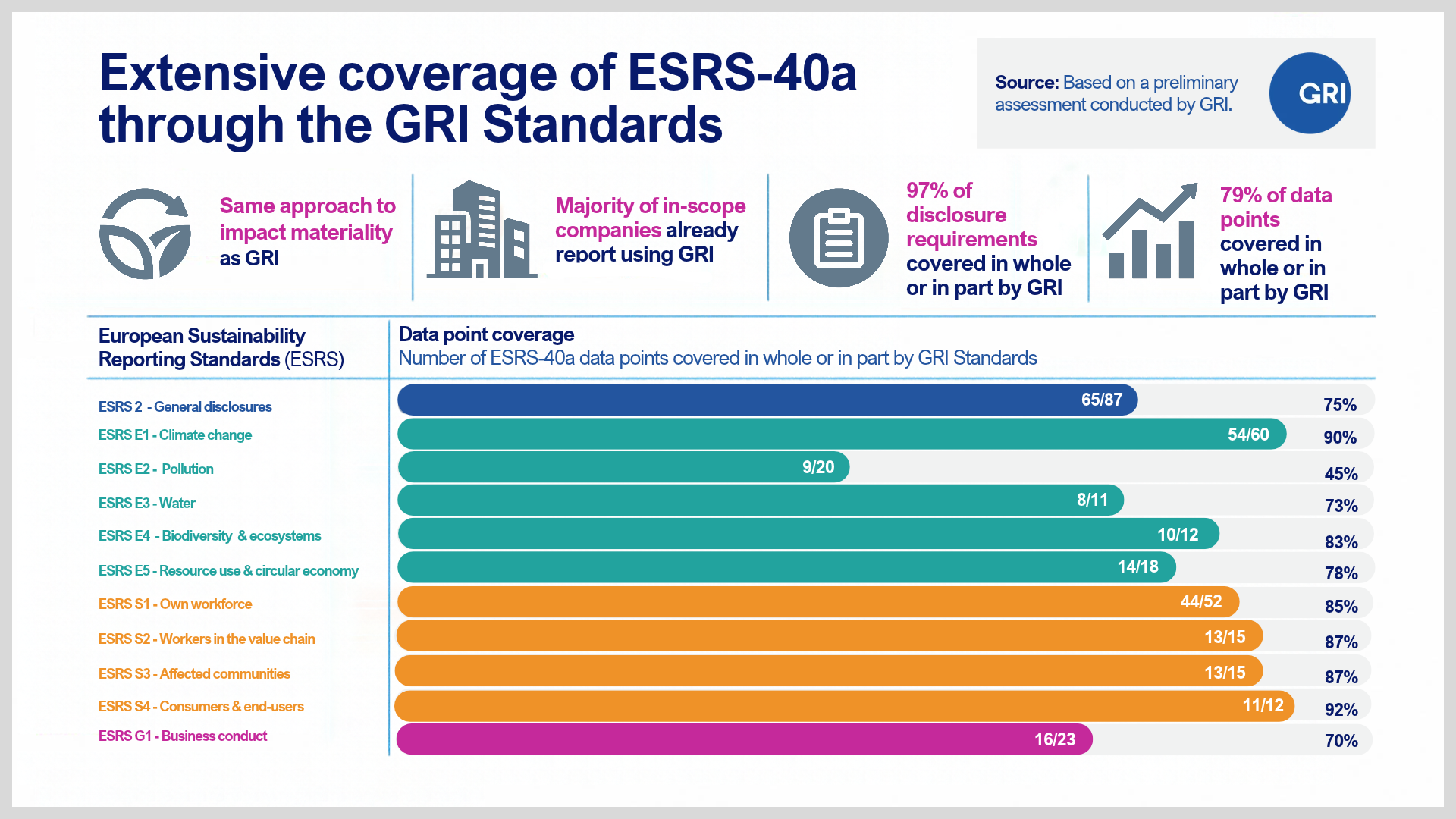
The ESRS-40a Exposure Draft, developed by EFRAG, proposes requirements for reporting of impacts on people and the environment, by companies outside of the EU. Their consultation is open until 31 October.
Article 40a of the EU Corporate Sustainability Reporting Directive (CSRD) establishes sustainability reporting obligations for non-EU companies that meet set criteria (turnover above €450 million, and one or more EU subsidiary or branch with turnover in excess of €200 million).
GRI’s analysis finds that the GRI Standards cover, in whole or in part, 97% of ESRS-40a disclosure requirements and 79% of its data points. The majority of likely in-scope companies already report with GRI, including: 84% in China; 77% in Japan; 77% in Switzerland; 76% in South Korea; and more than 40% in the USA.