
Turning climate ambition into evidence at COP31
Published date: 05 November 2026
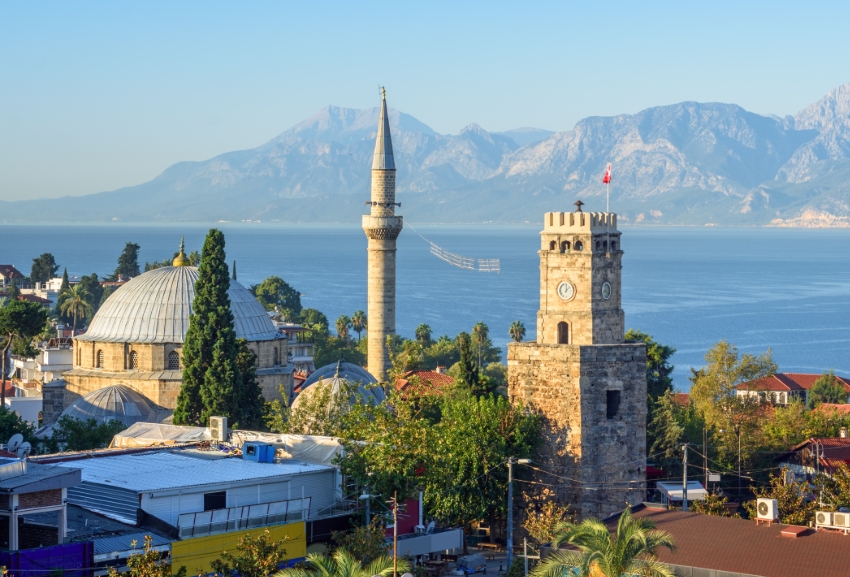
GRI champions collaboration, practical solutions and a just transition – as UN global conference to commence in Türkiye
As world leaders prepare to gather in Antalya for the UN Climate Change Conference (9-20 November), GRI will be on the ground making the case for how credible reporting turns climate commitments into measurable progress, enabled by capacity building, practical tools and partnerships to support organizations worldwide.
With the COP31 Presidencies, Türkiye and Australia, calling for ‘concrete, measurable, and implementation-oriented outcomes’, GRI’s focus is on using impact reporting as a vital tool for tracking climate action, strengthening the credibility of net-zero commitments, and informing climate decisions that deliver benefits for people and the planet.
With GRI 102: Climate Change and GRI 103: Energy to take effect for all GRI reporting from from 1 January 2027, the global foundation for organizations to disclose their climate-related impacts is in place, including those related to energy use and emissions, transition and adaptation plans, and the consequences of climate action for workers and communities.
GRI’s delegation at COP31 will be represented by Camila Corradi Bracco (Policy Lead) and Danielly A. Mello Freire (GRI Brazil Lead), alongside representatives from GRI’s Stakeholder Council.
Key GRI engagements in the COP31 Blue Zone next week include:
- 11 November - Information Integrity on Climate Change and ESG (CFQ Pavilion). Danielly A. Mello Freire joins a panel to explore how corporate sustainability data contributes to reliable, verifiable and evidence-based climate decisions.
- 12 November - Collective Action for Circularity: Enabling Business Action Across Industry and Value Chains (Side Event Room 5). Camila Corradi Bracco joins this UNGC-hosted event on scaling circular practices by addressing implementation challenges.
- 13 November - Corporate Climate Reporting Standards, Transition plans and Digital Reporting (Standards Pavilion). This UN-SSE panel with Camila Corradi Bracco will cover cover the latest climate disclosure expectations, including the role of alignment and digital infrastructure.
- 14 November - Educating Markets for Climate Action at COP31 (GORD Pavillion). Camila Corradi Bracco joins a panel, hosted by the Gulf Organisation for Research & Development, on how capital markets can advance climate education at scale.
- 16 November - Driving Climate Action Together: From the Global Stocktake to Implementation (Special Event Room 6). Camila Corradi Bracco moderates a UNFCCC panel on opportunities and challenges of non-state climate action toward net zero emissions.
- 17 November - Industry-Biodiversity Nexus in the Decarbonization of Hard-to-Abate Sectors (UNIDO Pavilion). This session on bridging the priorities of industrial decarbonization and ecological preservation has Camila Corradi Bracco as a speaker.
Putting climate reporting into practice
As organizations prepare to adopt GRI 102, GRI is sharing real-world examples of how impact reporting is strengthening climate disclosure and decision-making. Four corporate case studies – featuring Wipro, Aitken Spence, Capricorn Group and the Dubai Electricity and Water Authority – explore their climate reporting journeys.
Drawing on experiences across different sectors and regions, these case studies offer practical insights for organizations seeking to improve the quality and usefulness of their climate reporting, building on the global best practice provided by the GRI Climate Change and Energy Standards.
One reporting language for the three Rio Conventions
COP31 closes a year that spans the UN Convention to Combat Desertification (in August in in Ulaanbaatar), the UN Convention on Biological Diversity (in October in Yerevan), and now the UN Climate Change Conference (in Antalya). The COP31 Presidency has made ‘cross-sectoral action on climate change, biodiversity loss, and land degradation’ an explicit priority.
For companies, that coherence starts with how they report. The GRI Standards connect these impacts in one system: climate and energy (GRI 102 and 103); biodiversity, including land and sea use change and ecosystem restoration (GRI 101); water (GRI 303); waste and materials (GRI 306 and 301); and the impacts of the transition on workers, communities and Indigenous Peoples.
Supporting synergies across the Rio Conventions, GRI will make the case in Antalya that this connected, global common language for sustainability reporting is crucial in helping companies, investors and governments to assess and deliver on all three conventions.
Watch out for more to come from GRI, including further resources and support, during COP31!